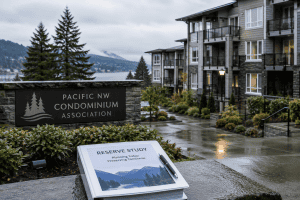
In the Pacific Northwest, condominium associations face unique challenges that directly affect insurance risk. Our region’s persistent rainfall, windstorms, seismic activity, and coastal environments accelerate the deterioration of roofing, siding, decks, windows, plumbing, and other common area components. A professionally prepared Reserve Study by Pacific Crest Reserves provides insurance carriers, brokers, and association boards with a comprehensive inventory of these major assets, documenting their age, condition, remaining useful life, and estimated replacement costs. This information offers a clear picture of how well a community is being maintained and the potential risks that may impact future insurance claims.
For insurance underwriters, a current Reserve Study is a valuable risk assessment tool. Associations that adequately fund their reserves and follow a planned replacement schedule are far less likely to defer critical maintenance, reducing the likelihood of water intrusion, structural failures, and other costly claims. A condominium community with a funded roof replacement plan, for example, presents a significantly lower insurance risk than one with an aging roof and no financial strategy to replace it. This allows insurers to make more informed decisions regarding coverage, pricing, and policy terms.
Pacific Crest Reserve Studies also support proactive loss prevention. By identifying major components approaching the end of their useful life, association boards can schedule repairs and replacements before failures occur. In the Pacific Northwest, where moisture intrusion is one of the leading causes of building damage, timely replacement of roofing, siding, decks, windows, and waterproofing systems can prevent extensive structural damage and costly insurance claims. Planned capital improvements also provide opportunities to incorporate more durable, resilient materials that better withstand the region’s climate.
From a financial perspective, Reserve Studies help ensure that insurance coverage keeps pace with the association’s assets. Accurate replacement cost estimates assist brokers in evaluating building limits, deductibles, and specialized coverages such as Earthquake Insurance. Strong reserve funding also demonstrates sound financial management, providing insurers with greater confidence that the association can properly maintain its common property without relying on special assessments or deferred maintenance.
Pacific Crest Reserve Studies can also prove invaluable during the claims process. Although they are not prepared for insurance claims, they serve as a detailed pre-loss inventory of the property’s major components. Insurance adjusters can use the documented condition, age, and estimated replacement costs to verify the extent of damage, distinguish between sudden losses and long-term deterioration, and develop more accurate repair estimates. This often results in faster claim resolution and fewer disputes for both the association and its insurance carrier.
For Pacific Northwest condominium associations, a Pacific Crest Reserve Study is far more than a budgeting document. It is a long-term asset management plan that supports responsible governance, improves insurability, reduces risk, and helps protect the association’s most valuable investment. By combining sound reserve planning with regular maintenance, boards can strengthen their financial position while demonstrating to insurers that their community is committed to preserving its buildings for decades to come.